
For colleges and universities, the campus visit is one of the most decisive moments in the enrollment process. Students who visit campus are more likely to apply — and how that visit feels shapes the decision more than most institutions realize. A 2026 study from the National Bureau of Economic Research found that students were 10% less likely to apply after a hot campus tour and 8% less likely after a rainy one. This finding suggests that the subjective impression of a visit, not just whether it happened, drives outcomes.
The trouble is, you can only run so many scheduled tour groups. Prospective students increasingly show up on their own schedule, or expect to tour from halfway across the world before they've ever set foot on campus.
Virtual and self-guided campus tours close that gap. Whether a student is exploring from their bedroom in another state or country, or wandering the quad on a Sunday when the admissions office is closed, the right tour app turns that moment into an intentional experience that reflects your institution the way you want it to.
Not all campus tour platforms are built the same way, though. Some are primarily narrative or audio-driven, and designed to tell the story of a campus. Others are visual and spatial, focused on 360° panoramic tours or navigating campus. That distinction is important when you're choosing a platform, so we've organized this list into two groups: campus tour platforms and campus mapping platforms.
Campus tour platforms
These platforms are designed to deliver a guided tour experience. They often include audio narration, images, video, route maps, and text content that walks a prospective student through your campus and what makes it worth attending.
Tourient
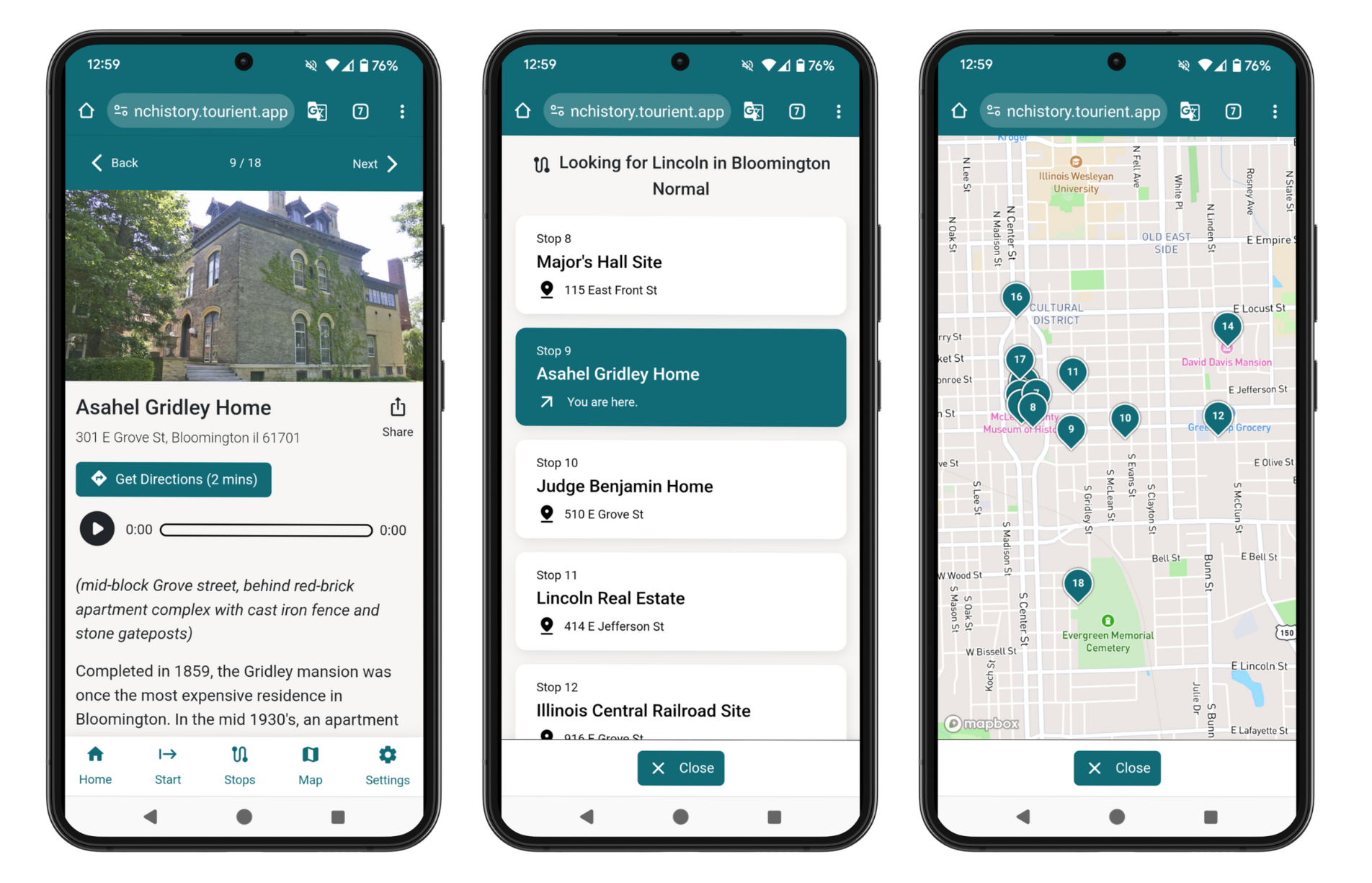
Tourient is a self-guided tour builder designed for organizations that want to tell the story of a place, not just navigate through it. For universities, that means tours built around campus history and traditions, architectural significance, the lived experience of student life, or the particular character of a program or department—the things that make a campus feel like this campus rather than any other.
The tour builder CMS is built for non-technical staff. Content blocks include audio narration, images, video, text, quizzes, polls, before/after images, 3D models, and more—all draggable into stops without coding. Tours are delivered as progressive web apps, which means visitors access them from a QR code or link with no download required. That matters for prospective students who are already on campus and not about to spend five minutes installing an app and creating an account they may never use again.
Their unlimited plan has no limits on the number of tours, languages, stops, or admin users. That lets institutions run parallel tours for different audiences. Imagine a prospective student tour, a current student orientation tour, an alumni heritage tour, and a weekend tour for parents, all under one account, each with its own branding and content. Tourient supports 73 languages, and includes built-in text and audio translation tools, making it useful for international student recruitment.
| Pros | Cons |
|---|---|
| Unlimited tours for different audiences | No native 360° panoramic viewing |
| Built-in text translation and audio generation tools | No admissions CRM integration |
| QR codes, GPS maps, and keypad way-finding | Limited offline mode |
Guidebook
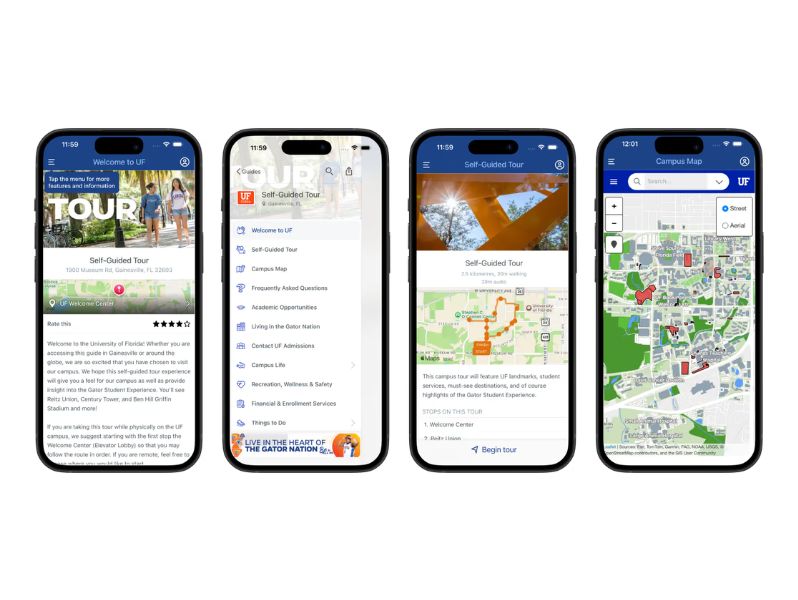
Guidebook started as an event app for conferences, and has recently moved into higher education. They position themselves as the campus app for the full student lifecycle, from prospective student visit through orientation, enrollment, and beyond. The campus tour product sits inside a broader platform that also handles open houses, admitted student days, orientation scheduling, and push notifications.
The tour experience, which requires an app download, is built around turn-by-turn walking routes. A visitor follows a numbered path between stops, with audio narration at each location and a live map showing their position. Push notifications let admissions teams send real-time messages to everyone currently using the app.
About 50% of U.S. universities use Slate for their admissions CRM, and Guidebook has a direct integration built-in. Visit data flows back into Slate records automatically: which students showed up, how long they stayed, which stops they visited, and whether they opened the app again after going home.
| Pros | Cons |
|---|---|
| Slate CRM integration | Overkill if you only need a tours app |
| Push notifications for real-time communication | Requires app download |
Campus360
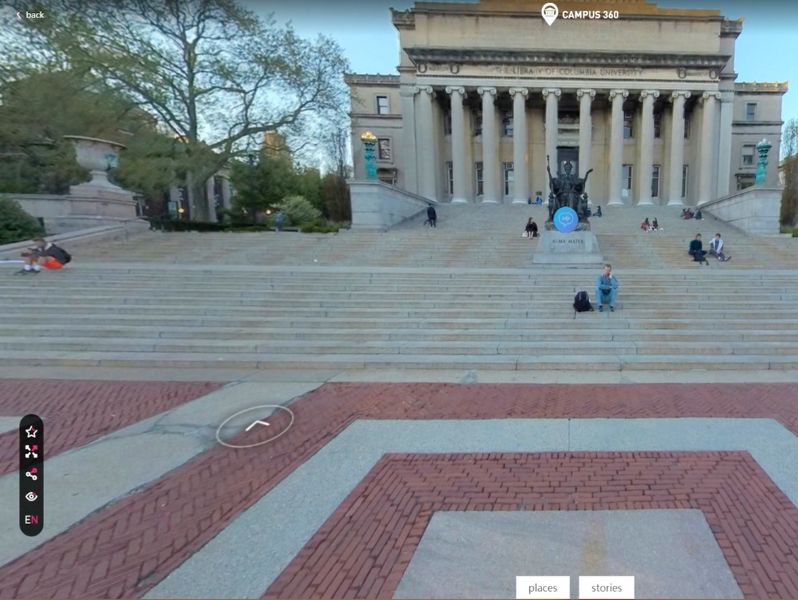
Campus360 is a 360° virtual campus tour platform with a unique production model: student photographers at each institution shoot the panoramas. That keeps production costs manageable, and gives the tours an authenticity that professional production sometimes loses. You're seeing the campus through the eyes of someone who actually goes there.
Tours are navigable in a web browser on any device and also available through a dedicated Meta Quest VR app. The multilingual interface supports English, Chinese, Arabic, and Spanish, which directly addresses international student recruitment, but to a lesser extent than other platforms like Tourient.
Students and counselors can browse and compare campuses for free, which means Campus360 also functions as a discovery platform for students who haven't yet shortlisted schools. For institutions, the platform serves as either a recruiting opportunity or a limitation, depending on how much control you want over your visitor's first impression.
| Pros | Cons |
|---|---|
| Student-photographer production model | Pricing not published |
| Multilingual (English, Chinese, Arabic, Spanish) | Accessibility compliance not specified |
CampusTours
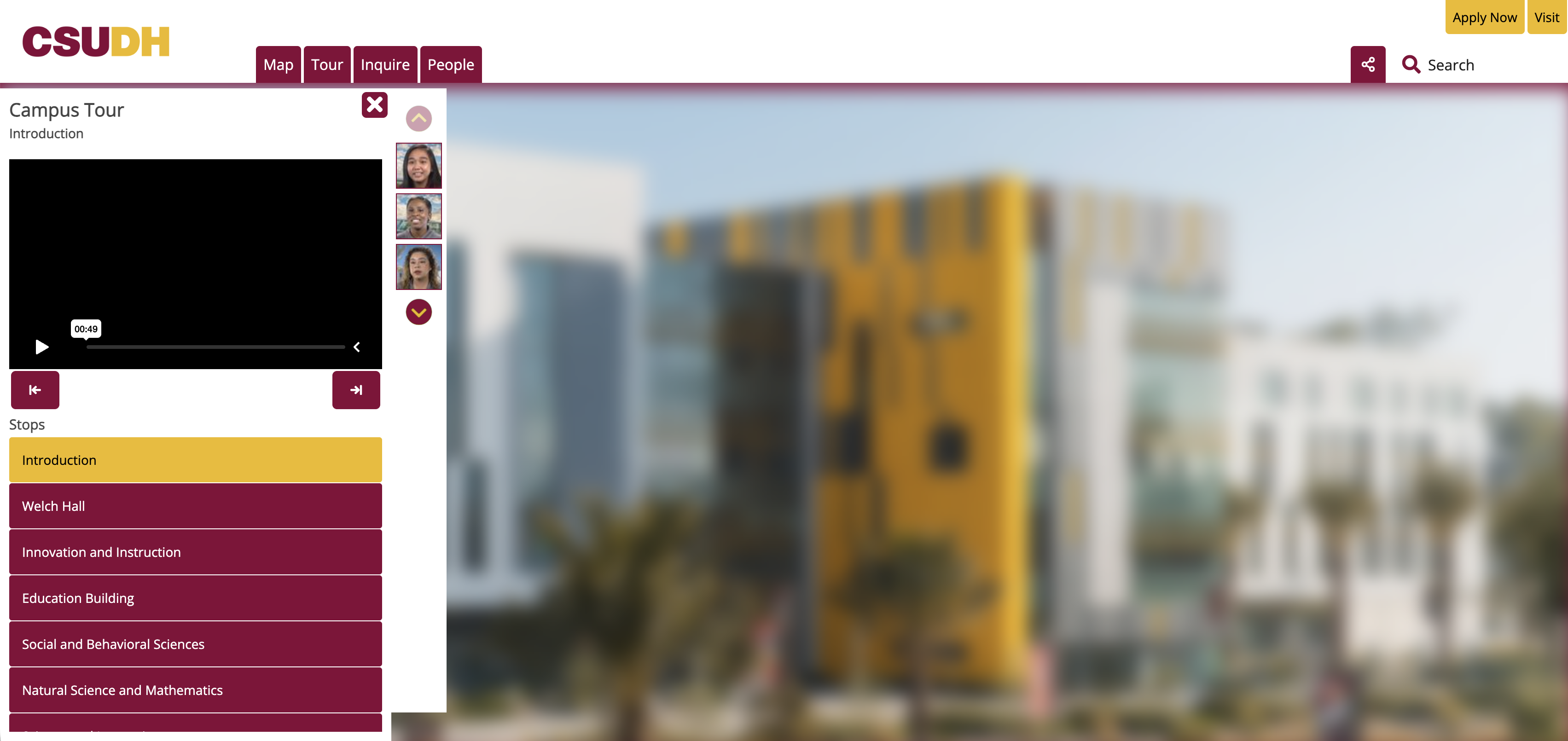
CampusTours has been operating in this space since 1997, making it a three-decade veteran of campus tour technology.
Its tour product, AnyTour, includes video tours, 360° panoramas, narrated walk-throughs, and self-guided walking tours. For institutions that want a professionally produced video tour with drone footage, studio voiceover, and cinematic editing, CampusTours also offers production services for an undisclosed additional cost.
That makes CampusTours more of a managed service relationship than a pure self-service tool. You're working with a production team rather than building and updating content yourself, which means higher production quality but less flexibility for quick changes.
Note that CampusTours also offers AnyMap, an interactive map platform with layers. That product is covered in the mapping platforms section below.
| Pros | Cons |
|---|---|
| Professional video and 360° production services | Less suited to self-service content updates |
| 30 years of experience | No public pricing |
Campus mapping platforms
These platforms are primarily designed for spatial navigation and campus orientation rather than narrative tour experiences. Many institutions use them alongside a tour platform, while others need to decide which type of tool they actually need.
Concept3D
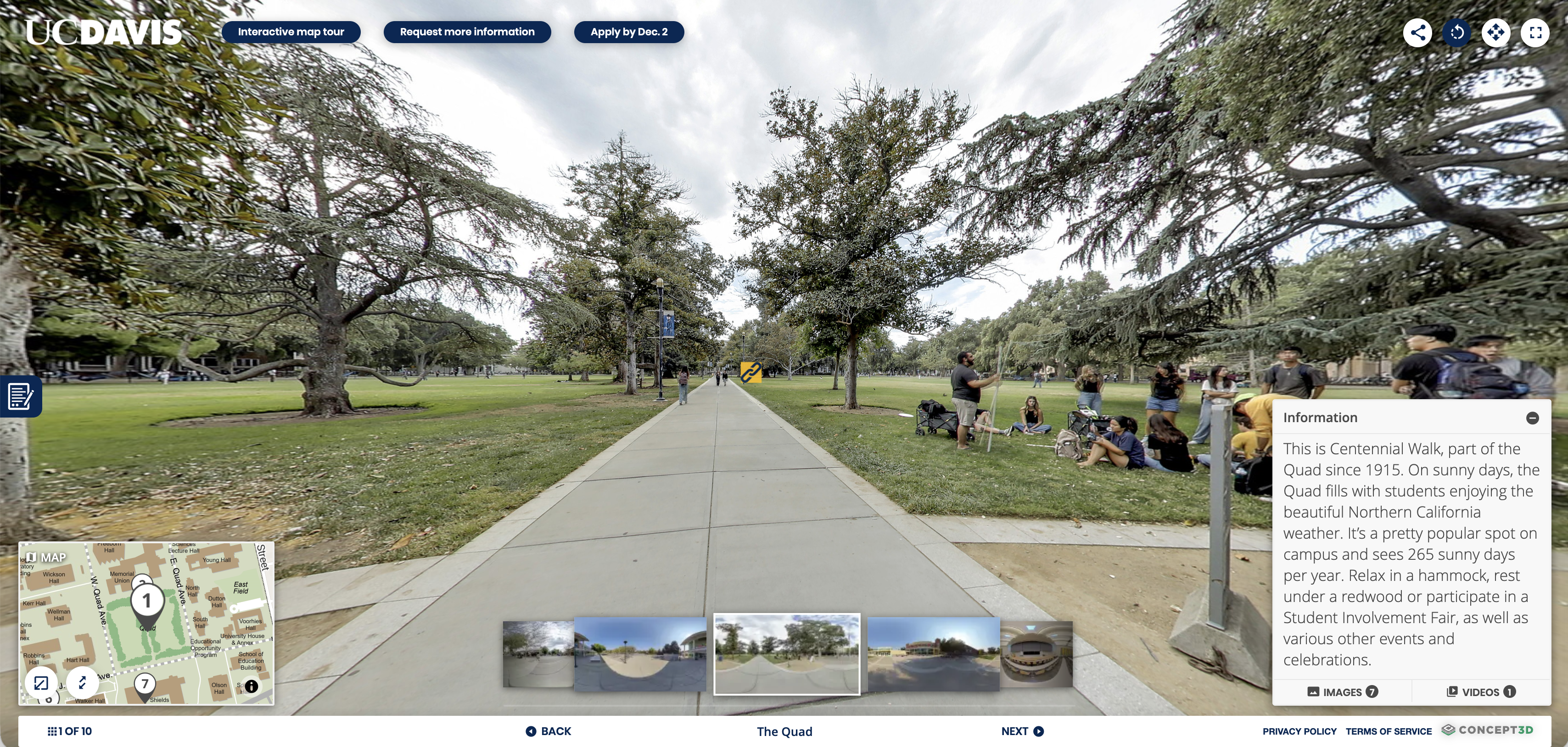
Concept3D is specifically a campus mapping platform, not a tour platform. Tour platforms guide visitors through a curated narrative experience, while Concept3D is a data-layered interactive map of the entire campus. Data layers are toggle-able, so a visitor can filter the map to show only what they care about.
Many institutions use Concept3D as their primary campus navigation infrastructure and then layer a separate tour experience on top of it. A prospective student might orient themselves on a Concept3D map when they arrive, then follow a Tourient or Campus360 walking tour for the curated experience. The two tools can serve different moments in the same visit.
If your primary need is a live, up-to-date campus map that your website, signage, and mobile tools can pull from, Concept3D is purpose-built for that.
| Pros | Cons |
|---|---|
| Most comprehensive campus mapping available | Not a tour experience; no narration or stop-by-stop content |
| Layered data: dining, parking, accessibility, events | More complex than needed if a guided tour is the primary goal |
| Useful as map alongside a tour platform | Pricing not published |
CampusTours AnyMap
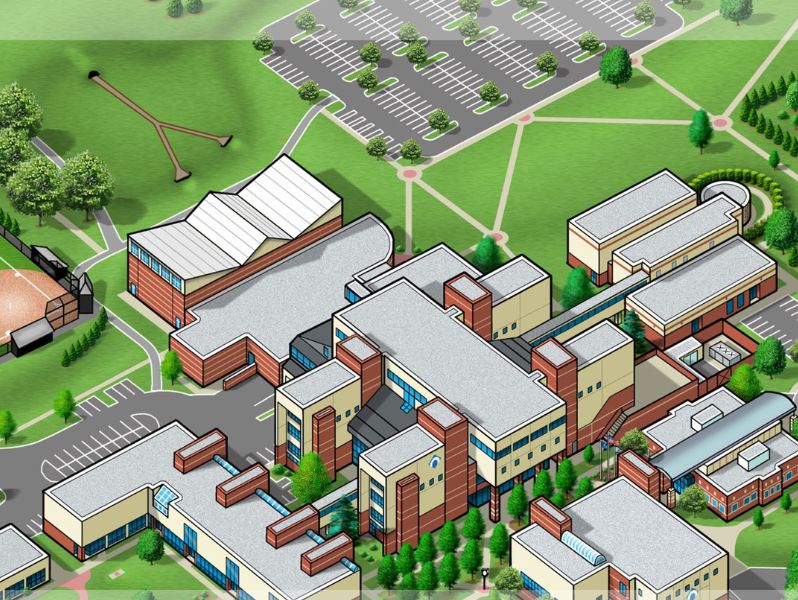
CampusTours' AnyMap product also belongs in this category. Where AnyTour delivers narrated tour experiences, AnyMap turns existing campus map files into a photorealistic interactive map with data overlays, way-finding, and mobile optimization. Institutions that want both a map infrastructure and a tour experience can get both from CampusTours under one vendor relationship.
A note on YouVisit and Appily
YouVisit was one of the early leaders in 360° immersive virtual campus tours. They served hundreds of institutions before being acquired by EAB in December 2019. EAB also owns Appily, the college search and discovery platform formerly known as Cappex. Both now operate under the same parent company. The company's website no longer provides product information or pricing, which makes it difficult to evaluate as a current option.
The right option for you depends on your use case
You're focused on international student recruitment.
Campus360 and Tourient provide a multilingual interface that makes their tours available to audiences the other platforms can’t reach.
You want professionally produced video and 360° tours and prefer a managed service relationship. CampusTours has three decades of experience and production services that go beyond a self-service builder.
You want to tell the story of your campus: its history, architecture, traditions, and culture.
Tourient's accessible audio tour app, flexible content types, and unlimited tour structure let you build the kind of experience that answers "what makes this place worth attending" rather than just showing where buildings are.
You need comprehensive campus navigation infrastructure.
Concept3D (or CampusTours AnyMap) is the right tool if the primary need is a map that feeds your website and way-finding systems, rather than a narrative tour experience.
FAQs about virtual college tour apps
What's the difference between a virtual tour and a self-guided campus tour?
A virtual tour typically means a 360° panoramic or video experience that lets someone explore campus remotely. They’re similar to a virtual real estate tour like you’d see on Zillow. Virtual tours help students decide whether they want to visit in person.
A self-guided campus tour is an on-site experience where a student physically walks the campus using their phone for directions, narration, and context. Both are valuable, and serve different student segments in the enrollment process. Some platforms do one or the other; some do both.
Do students actually use self-guided tour apps?
Research from Eduventures suggests that while 82% of high school sophomores and juniors intend to visit campus before applying, only 48% of seniors report having actually done so. Among those who do visit, a 2023 Niche survey of high school seniors found that 22% visited a campus on their own without scheduling an official visit.
That 22% is the audience a self-guided tour app is built for. Without one, those students walk your campus and leave with whatever impression they formed on their own. With one, you're giving them the same structured, intentional experience your scheduled visitors get, but on their schedule, without requiring your staff to be available. It's reach you otherwise wouldn't have.
Additionally, students (and the general public) prefer the scan-and go convenience of a QR-code or URL-based tour, rather than being required to download an app.
Can we run tours in multiple languages?
Yes, several platforms support multilingual tours.
Tourient supports 73 languages, and includes machine text translation and text-to-speech audio narration, which means you don't need to separately record audio in every language.
Campus360 supports tours in English, Chinese, Arabic, and Spanish. If international recruitment is a strategic priority, multilingual support for the languages your students speak should be a non-negotiable in your evaluation.
What does WCAG compliance mean for a campus tour app?
WCAG (Web Content Accessibility Guidelines) sets standards for digital accessibility. These guidelines consist of 86 success criteria, including screen reader support, text contrast, adjustable text sizes, captions, and audio descriptions. There are three levels of compliance: Level A (the bare minimum), Level AA, and Level AAA.
Level AA is the legal compliance expectation for most institutions.
For campus tours, this means students with visual or hearing impairments can use the tour without workarounds, and your institution isn't exposed to accessibility complaints about a public-facing digital product. Verify the compliance level with any vendor before purchasing, and ask specifically whether they publish an VPAT for institutional review.
Can a tour app replace tour guides and admissions volunteers?
Tour apps are not a replacement for your existing guides and volunteers, but they do help you reach students you’d otherwise miss. The ones that visit on weekends and holidays, and those that don’t know to schedule in advance. They can also help you provide a tour experience for students that can’t physically visit your campus.
Plus, an app frees up admissions staff for higher-touch moments: answering specific questions, hosting admitted student events, personally contacting students who are on the fence.